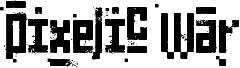
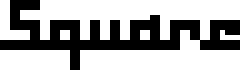
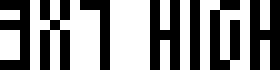
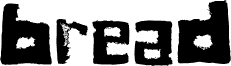
Ancient G Modern von Gen Aris ist eine kostenlose Pixel-Bitmap-Schrift mit einem strengen, futuristischen Charakter. Aufgebaut aus klobigen rechteckigen Strichen, quadratischen Einschnitten und abrupten, treppenartigen Ecken, wirken die Buchstaben wie kodierte Signets, die auf einem frühen Computerbildschirm erscheinen.
Ihre starre Geometrie passt perfekt zu Spieloberflächen, Sci-Fi-Postern, elektronischer Musikgrafik und Technik-Event-Designs. Diese kostenlose Schrift funktioniert am besten in kurzen Schlagzeilen oder Titelkarten, wo die ungewöhnlichen Öffnungen und ineinandergreifenden Blockformen genug Raum haben, um ihre Wirkung zu entfalten, ohne ihren seltsamen, monumentalen Rhythmus zu verlieren.
--
Ancient G Modern ist eine Erweiterung des SGA/SG1 ANCIENT Canon-Glyphensatzes, der eine vollständigere Schriftart bietet. Sie unterscheidet zwischen Groß- und Kleinschreibung und enthält Satzzeichen sowie erweiterte Sonderzeichen.
Fragen oder Kommentare können an mich gerichtet werden unter
genaris at gmail dot com
by Gen Aris -Inspired by fan fonts Anquietas, Alteran, & my personal prefs . . .
Schriftfamilie
Ancient G Modern
Schriftunterfamilie
Regular
Einzigartige unterfamilieidentifikation
Ancient G Modern:Version 1.00
Vollständiger schriftname
Ancient G Modern
Name-tabelle version
Version 1.00 September 26, 2008, initial release
Postscript-schriftbezeichnung
AncientGModern
Schutzmarken
FANS are welcome to USE or MODIFY at will but please RENAME any modified versions you may create as to avoid confusion. :)
Hersteller
Gen Aris
Designer
Gen Aris
Beschreibung
A variant of the ANCIENT glyphsets used by the Ancients in Stargate: Atlantis.
The purpose with this revision is to CREATE PUNCTUATION and ADDITIONAL CHARS/SYMBS to facilitate better clarity when applying this font to English documents which contain punctuation and other characters.
Per show canon, the Ancients did not appear to use punctuation marks, nor did they distinguish between Upper/Lower case. Again, to facilitate use of this font in regular documents or even as the Windows font (for menus etc) I have created CAPITALIZED VARIANTS which are identical to the lower case except I added a SQUARE DOT FLOATING ABOVE TOP LEFT of CAPPED KEYS. Passwords and user names sometimes use L/case and U/case letters, so it is necessary to distinguish the 2 cses in daily life here on Earth!
My logic for the design of new characters is as follows:
Letters are made up of white/black blocked spaces dividing on a 3 wide by 4 high grid. A few letters make use of subdivsions within the grid.
In canon, all numerals share a centered descender "tail" unlike the letters.
I took this further, by giving all punctuation mark glyphs a centered ascender on top, like an upside down version of the numeral tail -- an "antenna" if you will. This should make it easier to become facile at visually distinguishing punctuation marks from letters or numbers.
Some punctuation marks or symbols are used in numeric/math contexts partly or wholly. So, math or number oriented and shared alphanumeric/math punctuations are given the "tail" of numerals and the "antenna" of punctuation/symbols to so indicate the context.
The numbers, in canon, have a slightly more subdivided or even an altered grid used in their design than do the letters. Here, as well, both numbers and punctuation/symbols share this more prominent use of subdivision or underlying grid different from the letter glyphs.
Overall, I tried to adhere to the digital, techno-sensibility of the glyphs as seen in SG-1 and SGA while striking a balance with variations of weight and tone so as to be reasonably attractive, while remaining aware of the need to make this practical and functional. How well I fared toward my goals, I leave to you to decide. :)
Gen Aris genaris@gmail.com
Erweiterte Schriftinformationen
Unterstützte Plattformen
PlattformKodierung
UnicodeUnicode 2.0 und nachfolgende Semantik, nur BMP-Unicode
MacintoshWestliche (römische)
MicrosoftNur BMP Unicode
Schriftdetails
Erstellt2008-09-27
Version1
Anzahl der Glyphen121
Einheiten pro Em1000
EinbettungsrechteEinbindung für Festinstallation
SchriftklasseOhne Klassifikation
StärkeMittlere
BreiteSehr eng
Mac-StilFett
SchreibrichtungNur stark von Links nach Rechts gehende Schriftzeichen + enthält